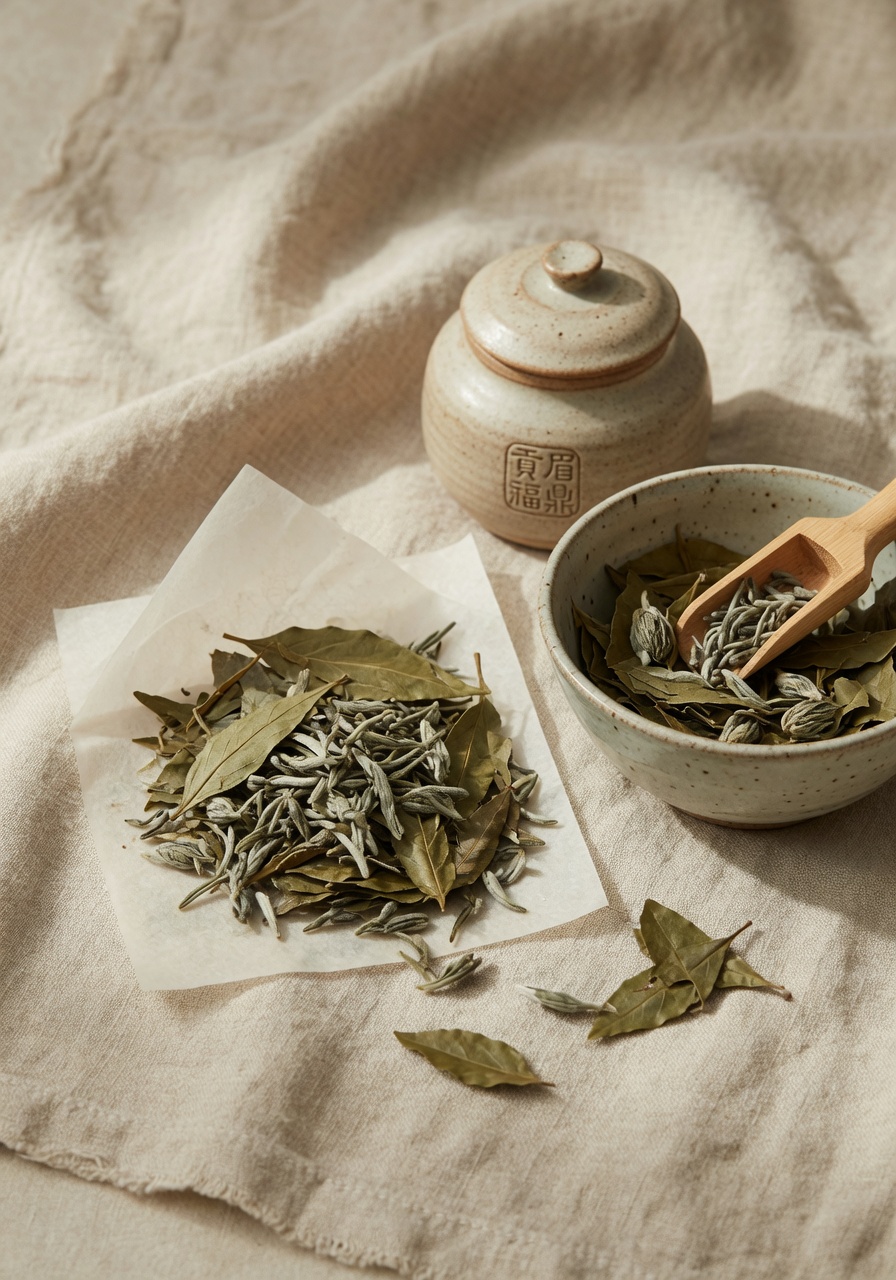
Hui Yi 每年春天造訪福鼎兩次。她對這批茶的筆記描述,在通風竹匾上進行了五十二小時的萎凋,每天手工翻動四次,然後以短暫的低溫乾燥,使含水量鎖定在百分之七以下。沒有揉捻、沒有塑形 — 茶葉保持舒展、略顯不羈的形態,茶梗完整。這正是真正的 gòng méi 與更常見的 shòu méi 等級的區別:採摘標準更精細,萎凋時間更長、更為謹慎。
她選擇這批茶用於樣品計劃,因為它展示了從容的日光萎凋對尋常品種葉片所產生的效果。這裡沒有珍稀古樹的故事,沒有高山的神秘氣息 — 唯有工藝、天氣與時間。2026 年春季,福建沿海異常乾燥,使得果園般的水果特質比往常更早集中。Hui Yi 建議將這包茶的一半趁鮮品飲,另一半陳放一年後比較。
The leaf, brewed
Soft hay, melon rind, river-stone minerality
dry leaf
Olive-grey leaves with pale stems and silver tips — scent of sun-dried grass and pressed apple.
wet leaf
Opens to soft moss-green with copper edges, smelling of warm hay, pear skin, and a faint dairy note.
liquor
Pale straw turning amber by infusion four — clear, with a fine oily sheen on the surface.
aroma
Cup aroma sits low and quiet — chamomile, melon rind, distant beeswax, no roast.
taste
Light-bodied but textured — orchard fruit and hay up front, a middle of cooked pear, then a clean mineral pull. Very low astringency.
finish
Cool huigan in the upper throat, returning as sweet melon water about thirty seconds after the swallow.
Brewing
A method, not a recipe.
Method
gongfu
Ratio
5g / 110ml
Water temp
92°C
First infusion
15s after a 5s rinse
Subsequent
6 to 8 infusions — add 10s each round, push to 60s for the last two